Where the houses came from
Greek settlers began building Alacati's core in the 17th century, and many houses in the center are over a century old, a history noted by local sources such as Sultan Konak and by Small Luxury Hotels. After the 1923 population exchange between Greece and Turkey the houses changed hands, and because the town stayed economically quiet for decades, remarkably little was torn down. When restoration began, there was still a whole town's worth of original fabric to work with, which is the accident of history behind today's stone hotel scene.
The anatomy of the type
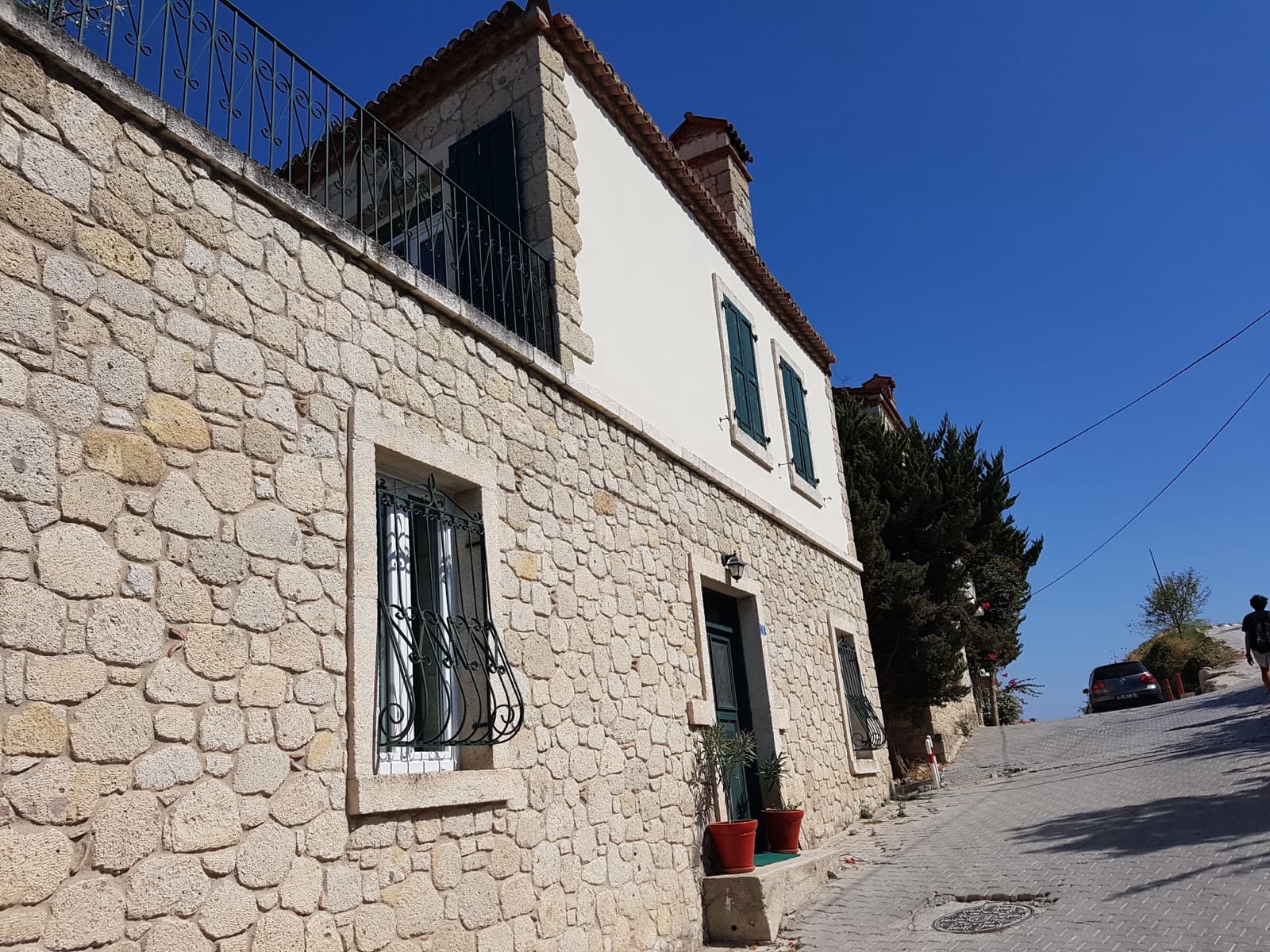
- Masonry walls. Load-bearing local stone, thick enough to carry two floors and to buffer heat. Interiors stay cool through August afternoons and hold warmth on winter nights, which is why unrestored houses remained livable for generations.
- Two stories, no more. The traditional form stops at two floors, and planning practice keeps new construction to the same scale and material, as reported by Mansion Global. That single rule preserved the town's roofline and is the reason no hotel towers interrupt it.
- Timber shutters and bays. Windows carry painted timber shutters, most famously in blues that read against the pale stone, with some houses adding projecting timber bay windows on the upper floor, an Ottoman-era touch on the Greek plan.
- The courtyard. Behind the street wall, houses open to walled courtyards that once held wells, vines and work space. Restorations turn them into breakfast gardens and pool terraces, and they are the feature that makes a ten-room hotel feel private.
What restoration changes, and what it cannot
A careful conversion keeps the masonry shell, the timber ceilings and the courtyard logic while threading in plumbing, cooling and insulation. The constraints are physical: window openings stay modest because the walls are structural, stairs remain steep in many houses, and elevators are rarely feasible. This is why rooms in the same hotel differ so much, and why travelers who need step-free access should ask direct questions rather than rely on photographs. The trade is worth knowing before you book; our stone hotels guide lists the practical questions to ask.
Seeing the type at its best
Walk Kemalpasa street early, before the shops open, when the stone reads cleanly, then cut into Hacimemis, where restoration came later and workshops still sit between cafes, as documented by We Heart Alacati. End on the windmill ridge above town: from there the two-story roofline shows as a single unbroken texture, which is the whole argument of the planning rules made visible. The old town guide turns this into a full walking route, and Türkiye's official promotion portal goturkiye.com has broader context on Aegean town heritage.